More ways to be heard.
Improve recognition across accents, speech differences and noisy spaces. Offer voice, text, keyboard and accessible controls without making one method a requirement.
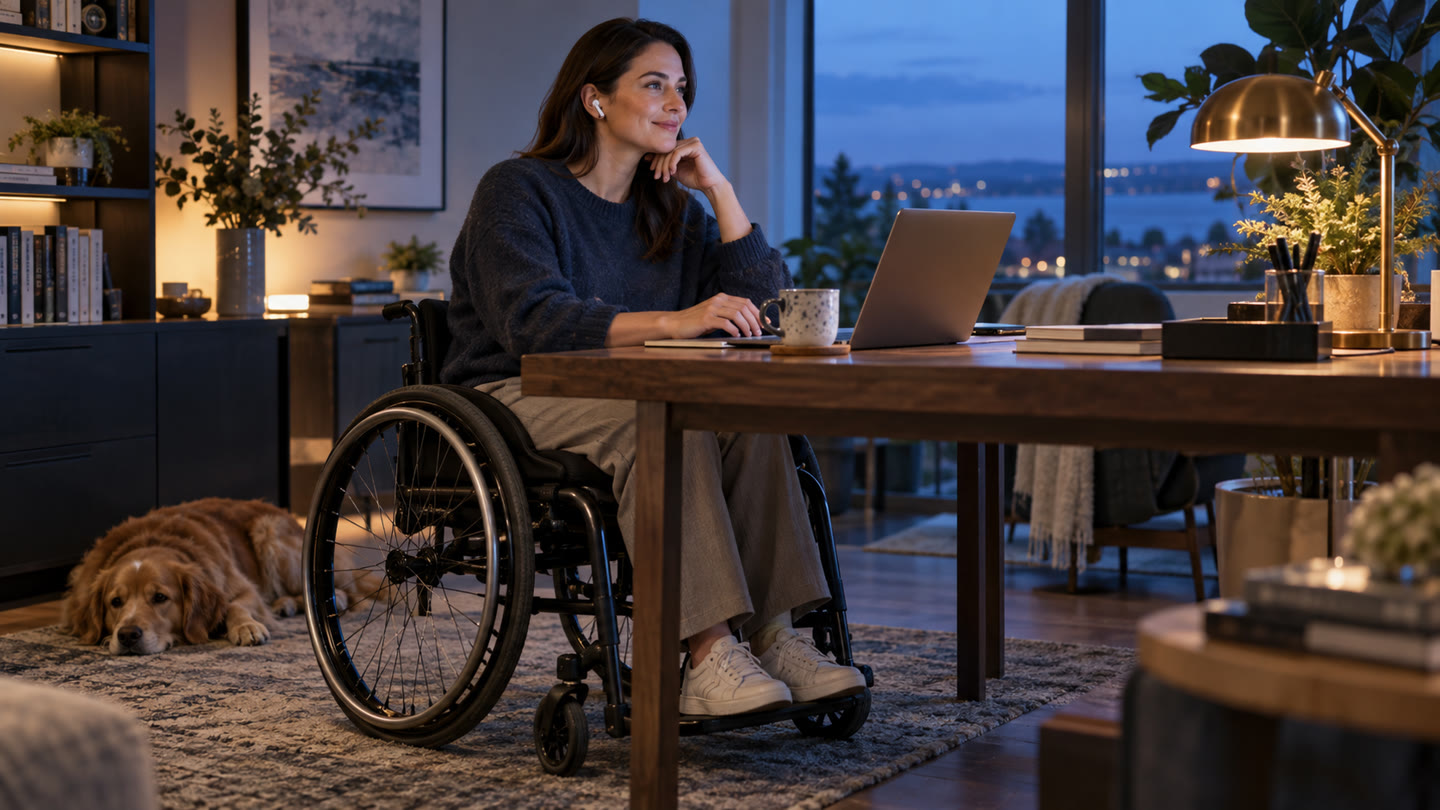
We want technology to open doors—not put another set of steps in the way.
For someone with limited mobility, fewer clicks can mean more independence. For someone studying, a patient explanation can change a difficult afternoon. For a creator, help with the first step can make an idea feel possible.
That is the future we see for B.R.I.G.G.S: useful, personal assistance that respects different abilities, energy levels and ways of communicating. Disabled people should help shape that future, not simply appear in its advertising.
These are development goals, not features we claim are complete or release-date promises.
Improve recognition across accents, speech differences and noisy spaces. Offer voice, text, keyboard and accessible controls without making one method a requirement.
Make supported applications, communication, reminders and information easier to use. Explore wearable and mobile connections without assuming constant listening is right for everyone.
Improve research and document understanding, show where answers come from, and make uncertainty visible. Keep meaningful permission, review and rollback around actions.
Develop stronger project-building, tutoring and technical exploration. Help people learn the skills behind the result, rather than leaving them dependent on an unexplained answer.
Personalisation should be a choice. Private information should be handled carefully. Improvements should be tested with real people. And you should always be able to stop, question or change what your assistant is doing.
Explore what BRIGGS can do today ↗
B.R.I.G.G.S